

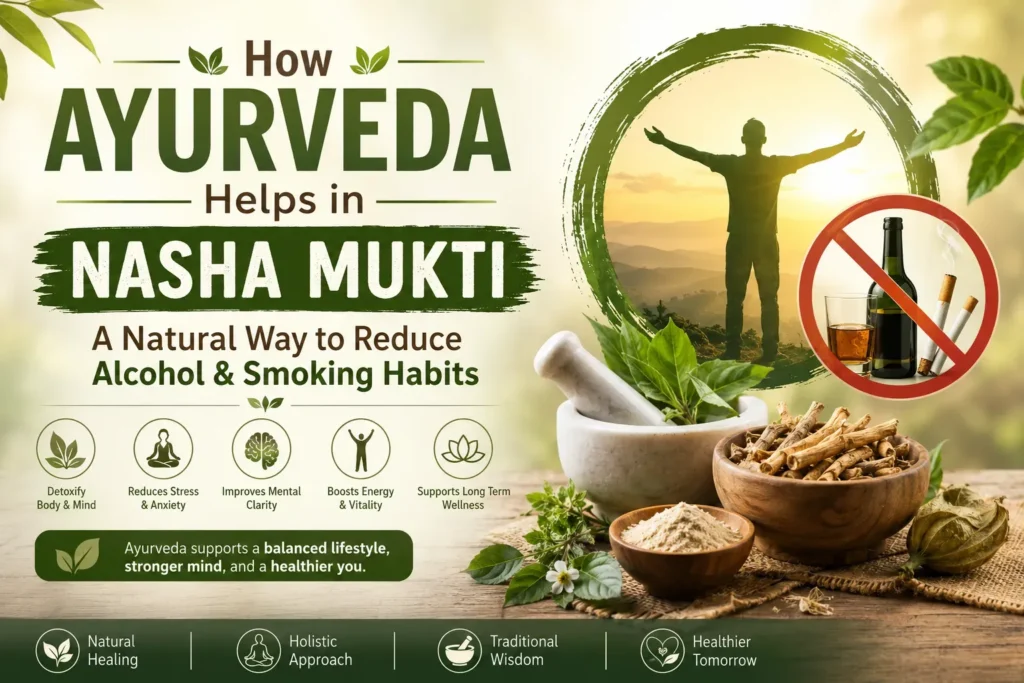
Alcohol and tobacco addiction continue to affect millions of people around the world. While many individuals want to quit these habits, the journey is often challenging because addiction can influence both physical and mental well-being. Overcoming addiction usually requires determination, support from family and friends, healthy lifestyle changes, and professional medical guidance.
Along with modern treatment methods, many people are also interested in traditional wellness practices such as Ayurveda. Instead of focusing only on symptoms, Ayurveda takes a holistic approach that aims to support overall health through balanced nutrition, daily routines, herbal practices, yoga, meditation, and stress management.
This article explains how Ayurveda supports a healthy lifestyle, the role of traditional Ayurvedic practices in Nasha Mukti, and the lifestyle habits that may help individuals who are working towards reducing alcohol and smoking habits.
What Is Nasha Mukti and how ayurveda helps in nasha mukti
The term Nasha Mukti means freedom from addiction. It refers to the process of reducing or quitting dependence on substances such as alcohol, tobacco, cigarettes, or other addictive products.
For many people, addiction develops gradually over months or years. As a result, recovery is also a gradual journey that often involves building healthier habits and receiving the right support.
Some common challenges faced during this journey include:
- Strong cravings
- Stress and anxiety
- Difficulty maintaining motivation
- Sleep disturbances
- Mood changes
- Social pressure
- Breaking old routines
Recovery is different for every individual. Some people benefit from counselling, some from support groups, and others may use lifestyle changes alongside professional treatment. There is no single solution that works for everyone.
Understanding Ayurveda
Ayurveda is one of the oldest traditional systems of wellness, with a history spanning thousands of years. The word Ayurveda comes from two Sanskrit words:
- Ayur meaning life
- Veda meaning knowledge
Together, Ayurveda means “the science of life.”
Rather than focusing on a single health concern, Ayurveda encourages balance between the body, mind, and daily lifestyle. It promotes long-term wellness through healthy eating, physical activity, proper sleep, stress management, and mindful living.
According to Ayurvedic philosophy, maintaining this balance supports overall well-being and helps people develop healthier routines over time.
How Ayurveda Looks at Addiction
From an Ayurvedic perspective, overall health depends on maintaining balance in the body and mind. Poor lifestyle habits, stress, irregular sleep, unhealthy eating patterns, and substance use can disturb this balance.
Instead of offering a quick fix, Ayurveda encourages gradual lifestyle improvements such as:
- Following a regular daily routine
- Eating nutritious meals
- Practicing yoga and meditation
- Managing stress effectively
- Staying physically active
- Using traditional herbal practices under professional guidance
These habits can support overall wellness and make it easier for individuals to stay focused on their long-term goals.
How Ayurveda May Support a Healthier Lifestyle
Although addiction treatment should always be guided by qualified healthcare professionals, Ayurveda offers several wellness practices that may complement an individual’s recovery plan.
1. Encourages Healthy Daily Habits
Ayurveda places great importance on routine. Waking up early, eating meals on time, staying hydrated, exercising regularly, and sleeping well are considered essential for maintaining overall health.
2. Supports Stress Management
Stress is one of the most common reasons people return to unhealthy habits. Practices such as meditation, breathing exercises (Pranayama), and mindfulness are widely recommended in Ayurveda to promote emotional balance.
3. Promotes Better Sleep
Good sleep plays an important role in physical and mental well-being. Ayurveda encourages consistent sleep schedules and relaxing bedtime routines to support overall health.
4. Focuses on Balanced Nutrition
Eating fresh fruits, vegetables, whole grains, healthy fats, and adequate protein provides the body with essential nutrients needed for everyday wellness.
5. Encourages Physical Activity
Activities such as walking, yoga, stretching, and light exercise can improve energy levels, mood, and general fitness while supporting a healthier lifestyle.
Why Lifestyle Changes Matter
No wellness system can replace the importance of healthy daily habits. Long-term success often depends on making positive lifestyle changes and maintaining them consistently.
Some simple habits include:
- Drinking enough water throughout the day
- Eating home-cooked, nutritious meals
- Avoiding situations that encourage alcohol or smoking
- Spending time with supportive family and friends
- Practicing meditation or yoga regularly
- Getting enough sleep every night
- Seeking professional help whenever needed
These habits not only support physical health but also contribute to better emotional well-being.
Traditional Ayurvedic Herbs Used in Wellness
Ayurveda includes many herbs that have been traditionally used to support overall health and well-being. These herbs are valued for their role in promoting balance, vitality, and healthy daily living. However, they should be used under the guidance of a qualified Ayurvedic practitioner or healthcare professional.
Ashwagandha
Ashwagandha is one of the most popular herbs in Ayurveda. Traditionally, it has been used to support stress management, improve energy levels, and promote mental well-being. Because stress can make it harder for some people to maintain healthy habits, practices that help manage stress may support long-term lifestyle changes.
Brahmi
Brahmi is traditionally associated with memory, concentration, and mental relaxation. It is commonly used in Ayurvedic wellness practices to support cognitive function and emotional balance.
Giloy (Guduchi)
Giloy is known in Ayurveda as a herb that supports general wellness. It has traditionally been used to promote immunity and help maintain the body’s natural balance.
Tulsi (Holy Basil)
Tulsi has been used for centuries in Ayurvedic traditions. It is valued for supporting respiratory health, immunity, and overall wellness.
Amla (Indian Gooseberry)
Amla is naturally rich in Vitamin C and antioxidants. It is traditionally used to support digestion, immunity, and healthy aging.
Haritaki
Haritaki is one of the important herbs in Ayurveda and has traditionally been associated with digestive wellness and the body’s natural cleansing processes.
It is important to remember that herbs are not a replacement for medical treatment. They should be considered part of a healthy lifestyle rather than a standalone solution.
The Importance of Yoga and Meditation
Yoga and meditation have always been an important part of Ayurvedic living. These practices focus on improving both physical and mental well-being, making them valuable for anyone trying to build healthier habits.
Yoga
Regular yoga practice may help improve flexibility, physical fitness, posture, and overall relaxation. It also encourages mindfulness, which can support healthier decision-making in daily life.
Meditation
Meditation helps many people develop greater awareness of their thoughts and emotions. Even 10–15 minutes of daily meditation may help reduce stress and improve focus.
Pranayama (Breathing Exercises)
Controlled breathing techniques, known as Pranayama, are widely practiced in Ayurveda and yoga. These exercises can promote relaxation and help individuals feel calmer during stressful situations.
Healthy Lifestyle Tips for Long-Term Wellness
A healthy lifestyle is one of the strongest foundations for improving overall well-being. Whether someone is working to reduce alcohol or smoking habits or simply wants to improve their health, these habits can make a meaningful difference.
Eat a Balanced Diet
Choose meals rich in vegetables, fruits, whole grains, lean proteins, and healthy fats. Limiting processed foods and sugary drinks can support overall health.
Stay Hydrated
Water is essential for many normal body functions. Drinking enough water throughout the day helps maintain hydration and supports general wellness.
Exercise Regularly
Walking, cycling, swimming, or light strength training for at least 30 minutes most days of the week can improve physical and mental health.
Build a Daily Routine
Following a consistent schedule for waking up, eating meals, exercising, and sleeping can make it easier to maintain healthy habits.
Get Quality Sleep
Adults generally benefit from 7–9 hours of quality sleep each night. A regular sleep schedule supports energy levels, concentration, and emotional well-being.
Surround Yourself with Positive Support
Friends, family members, mentors, or support groups can provide encouragement and accountability during lifestyle changes.
Common Mistakes People Make While Trying to Quit Addiction
Changing long-standing habits is rarely easy. Many people experience setbacks, and that’s a normal part of the process. Some common mistakes include:
Trying to Do Everything Alone
Support from healthcare professionals, family, or support groups can make a significant difference.
Expecting Instant Results
Lifestyle changes take time. Progress is often gradual rather than immediate.
Ignoring Mental Health
Stress, anxiety, or depression can make it more difficult to maintain healthy habits. Seeking professional help when needed is an important step.
Returning to Old Triggers
Visiting environments or spending time with people associated with previous habits may increase temptation. Identifying and avoiding triggers can help.
Giving Up After a Setback
Many people experience setbacks during recovery. Instead of seeing them as failure, they can be viewed as opportunities to learn and continue moving forward.
When Should You Seek Professional Help?
While healthy lifestyle practices and traditional wellness approaches can support overall well-being, professional medical help is important if someone:
- Finds it difficult to control alcohol or tobacco use.
- Experiences severe withdrawal symptoms.
- Notices addiction affecting work, relationships, or daily life.
- Has underlying physical or mental health concerns.
- Feels unable to quit despite repeated attempts.
Healthcare professionals, counsellors, and addiction specialists can provide personalized guidance and evidence-based treatment options.
Frequently Asked Questions (FAQs)
1. What is Nasha Mukti?
Nasha Mukti refers to the process of overcoming addiction to substances such as alcohol, tobacco, or smoking. It often involves a combination of medical treatment, counselling, healthy lifestyle changes, and ongoing support.
2. Can Ayurveda cure alcohol or smoking addiction?
Ayurveda should not be considered a cure for addiction. However, Ayurvedic wellness practices such as a balanced diet, yoga, meditation, and traditional herbs may support overall well-being as part of a broader recovery plan. Addiction treatment should always be guided by a qualified healthcare professional.
3. Which Ayurvedic herbs are commonly used for wellness?
Traditional Ayurvedic herbs such as Ashwagandha, Brahmi, Giloy, Tulsi, Amla, and Haritaki have long been used to support general health and wellness. They should be used under the guidance of a qualified practitioner.
4. Is professional treatment necessary for addiction?
Yes. If addiction is affecting your physical health, mental health, relationships, or daily life, it is important to consult a doctor or addiction specialist. Professional support plays a key role in recovery.
5. Can yoga and meditation help during recovery?
Yoga and meditation may help reduce stress, improve focus, encourage relaxation, and support emotional well-being. Many people include these practices as part of a healthy lifestyle.
6. How long does it take to overcome addiction?
Recovery is different for every individual. The timeline depends on several factors, including the type of addiction, its duration, personal health, and the support available. Consistency and professional guidance are important.
7. Why is lifestyle important in Nasha Mukti?
Healthy eating, regular exercise, quality sleep, stress management, and positive social support all contribute to overall well-being and can help people maintain healthier habits over time.
8. What should I avoid while trying to quit alcohol or smoking?
Avoid situations or environments that trigger cravings, limit stress where possible, maintain a regular routine, and seek support from trusted people or healthcare professionals.
9. Is relapse common?
Yes. Many people experience setbacks during recovery. A relapse does not mean failure. Seeking support and continuing with a recovery plan can help individuals move forward.
10. What is the first step toward recovery?
The first step is recognizing the need for change and reaching out for help. Speaking with a healthcare professional, counsellor, or support group can provide guidance and a structured recovery plan.
Key Takeaways
- Nasha Mukti is a gradual journey that requires patience and consistency.
- Ayurveda focuses on overall wellness through healthy routines and balanced living.
- Yoga, meditation, and stress management can support emotional well-being.
- Traditional Ayurvedic herbs have long been used for general wellness.
- Healthy eating, regular exercise, and quality sleep are important lifestyle habits.
- Professional medical guidance remains essential for addiction treatment.
- Family support and positive routines can improve long-term recovery.
Conclusion
Overcoming alcohol or smoking addiction is a personal journey that requires determination, patience, and the right support system. While there is no instant solution, building healthy habits can make a meaningful difference over time.
Ayurveda encourages a holistic approach to wellness by emphasizing balanced nutrition, regular physical activity, mindfulness, yoga, proper sleep, and stress management. These practices can complement professional treatment and help individuals work toward a healthier lifestyle.
Remember that every person’s recovery journey is unique. If you or someone you know is struggling with addiction, seeking guidance from qualified healthcare professionals is one of the most important steps. With the right support, consistent effort, and positive lifestyle changes, long-term recovery is possible.