
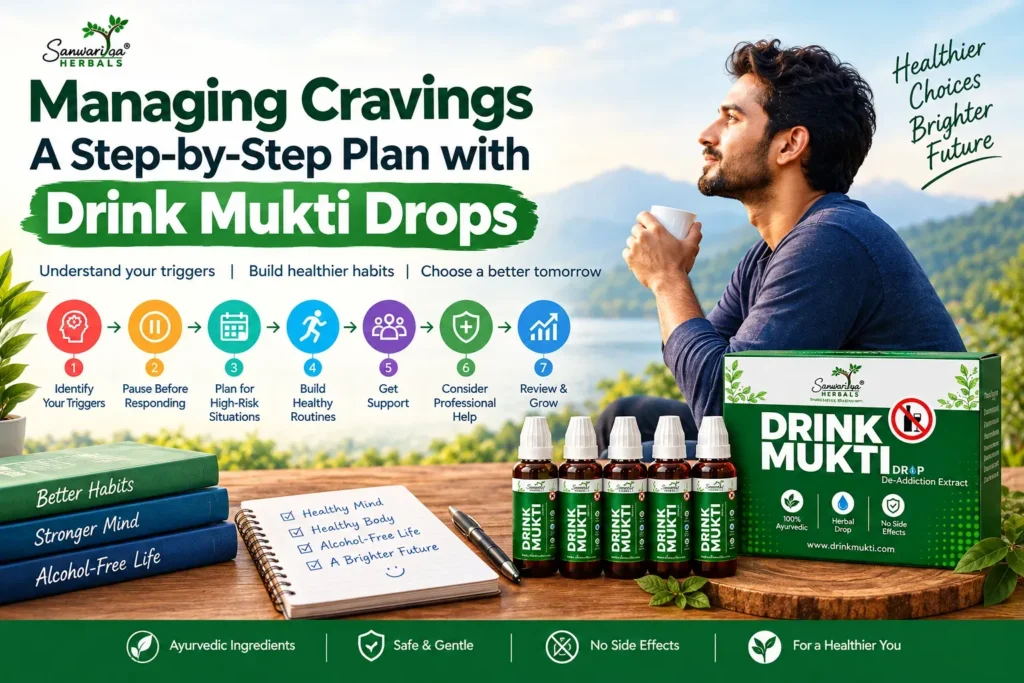
Managing alcohol cravings can be one of the most challenging parts of changing drinking habits. Even when someone genuinely wants to reduce or stop drinking, certain situations, emotions, routines or social environments may bring back the urge to drink. These experiences can feel frustrating, but they do not mean that change is impossible.
The first step is understanding what triggers these urges and learning how to respond to them in healthier ways. A structured approach, consistent daily habits, support from trusted people and professional guidance can help make recovery more manageable.
Drink Mukti Drops is a product associated with alcohol de-addiction support. If you are considering it as part of a recovery journey, it is important to understand its ingredients, directions and evidence for use, and to discuss its suitability with a qualified healthcare professional. It should not replace medical assessment, counselling or evidence-based treatment.
In this guide, we explore practical steps for understanding alcohol cravings, building a support system and working towards a healthier, alcohol-free lifestyle.
What Are Alcohol Cravings?
Alcohol cravings are strong urges or thoughts about drinking. They may appear after a stressful day, during social gatherings, at a familiar time of day or when someone experiences difficult emotions.
For some people, cravings are connected to familiar routines. For others, they may be associated with stress, loneliness, boredom or the desire to escape uncomfortable feelings.
Recognising cravings is an important part of alcohol recovery. Instead of reacting automatically, a person can learn to notice what is happening, identify the trigger and choose a safer response.
Cravings can vary in intensity and frequency. If they are persistent, difficult to manage or interfering with daily life, professional support can help identify appropriate treatment options.
Why Do Alcohol Cravings Occur?
Understanding the reasons behind cravings can make it easier to prepare for challenging situations.
1. Emotional Stress
Stress, frustration, anxiety and sadness can become associated with drinking when alcohol has been used as a way to cope with difficult emotions. Over time, this pattern can become difficult to change without learning alternative coping skills.
2. Familiar Routines and Environments
Certain places, people, social gatherings or times of day may remind someone of previous drinking habits. These reminders can trigger an urge even when the person has decided to make a change.
3. Social Pressure
Friends or colleagues may offer alcohol, or drinking may seem like an expected part of an event. Planning how to respond beforehand can help a person feel more prepared.
4. Changes During Recovery
People who have been drinking heavily may experience changes in mood, sleep and stress responses when reducing or stopping alcohol. Withdrawal can sometimes be medically dangerous, so a healthcare professional should guide the process when dependence is possible.
Understanding these triggers helps create a more realistic plan for managing cravings rather than relying on willpower alone.
A Step-by-Step Plan for Managing Alcohol Cravings
Step 1: Identify Your Triggers
Begin by noticing when the urge to drink tends to appear. You might find that cravings occur during stressful situations, after work, during certain social activities or when you feel lonely.
Keep a simple record of the situation, your feelings and what happened next. Over time, this may reveal patterns that you can discuss with a counsellor or healthcare professional.
The purpose is not to judge yourself. It is to understand the situations in which you may need additional support.
Step 2: Pause Before Responding
When a craving appears, try to create a short pause before making a decision. Move to a calmer environment, take a few slow breaths and remind yourself why you want to change your drinking habits.
You can acknowledge the feeling without treating it as an instruction you must follow. Some urges become more manageable when you allow time to pass and redirect your attention.
If cravings feel overwhelming or keep returning, reach out to someone you trust or a qualified professional rather than trying to manage everything alone.
Step 3: Make a Plan for High-Risk Situations
Think ahead about situations where alcohol may be present. If possible, avoid environments that strongly encourage drinking, especially while you are developing new routines.
Prepare a simple response to offers of alcohol, such as, “No, thank you. I’m focusing on my health.”
You can also plan alternative activities with supportive friends or family members. Having a plan before entering a challenging situation may make it easier to follow through with your decision.
Step 4: Develop Healthier Daily Routines
A consistent routine can provide structure during recovery. Consider regular meals, adequate sleep, relaxing activities and enjoyable hobbies that do not involve alcohol.
Walking, gentle physical activity, journaling, creative interests and spending time with supportive people may help you manage everyday stress.
These habits are not a cure for alcohol dependence, but they can support general well-being and provide healthier ways to spend time and respond to difficult emotions.
Step 5: Build a Reliable Support System
Recovery can feel isolating when someone believes they must handle everything alone. Speaking with a trusted family member, counsellor, doctor or recovery support group can make it easier to discuss challenges openly.
Choose people who respect your decision to change and can support you without judgement. If a particular environment or relationship makes drinking harder to avoid, discuss practical ways to establish safer boundaries.
Professional support is especially important when cravings are frequent, drinking feels difficult to control or previous attempts to change have not worked.
Step 6: Consider Professional Recovery Support
There is no single approach that works for everyone. Depending on the person’s circumstances, treatment may include counselling, behavioural therapy, supervised withdrawal management, prescribed medication or a combination of approaches.
A qualified healthcare professional can assess the level of support needed and explain the available options.
Drink Mukti Drops may be considered by people exploring the product for alcohol de-addiction support. However, do not assume that the drops directly reduce cravings, treat withdrawal or prevent relapse without reliable product-specific clinical evidence.
Before using any herbal or other supplement, check the full ingredient list, recommended directions, possible interactions and suitability with a healthcare professional. Do not discontinue prescribed treatment in favour of a supplement.
Step 7: Review Your Progress and Adjust Your Plan
Progress in recovery is not always perfectly steady. Some situations may become easier to manage, while others may still require extra preparation and support.
Review your experiences regularly. Ask yourself which coping strategies helped, which situations were difficult and what you could change next time.
Recognise constructive steps such as seeking help, attending an appointment, setting boundaries or following a healthier routine. If you return to drinking after trying to stop, treat it as a reason to reassess your support plan rather than a reason to give up.
How Drink Mukti Drops Fit into an Alcohol Recovery Plan
Drink Mukti is presented as an Ayurvedic herbal product for alcohol de-addiction support. People researching the product should look carefully at its ingredients, product information and directions before deciding whether it is appropriate for them.
A responsible approach to recovery considers the person’s overall health, drinking history, possible withdrawal risks and access to professional care.
Drink Mukti Drops should not be presented as a guaranteed solution for alcohol cravings or as a replacement for evidence-based treatment. Herbal products can have side effects or interact with medicines, and their safety and effectiveness depend on their specific formulation and available evidence.
If you are considering Drink Mukti Drops, speak with a qualified healthcare professional to determine whether the product is suitable for your circumstances. Continue any prescribed treatment unless your healthcare professional advises otherwise.
The most useful recovery plan combines informed decisions, practical coping skills, appropriate treatment and ongoing support.
Common Mistakes to Avoid When Managing Alcohol Cravings
Relying Only on Willpower
Cravings can involve learned habits, emotional triggers and changes associated with alcohol dependence. Practical strategies and professional support can be more helpful than expecting yourself to handle every situation alone.
Ignoring Emotional Triggers
Stress, frustration and loneliness may contribute to the urge to drink. Learning healthier ways to respond to these feelings is an important part of a sustainable recovery plan.
Expecting Instant Results
Changing established drinking habits takes time, and experiences vary from person to person. Be cautious of products or programmes that promise immediate or guaranteed results.
Replacing Medical Care with Supplements
Herbal products should not replace assessment or treatment for alcohol dependence. This is particularly important if you have been drinking heavily or experience symptoms when you stop.
When Should You Seek Medical Help?
Seek professional guidance if alcohol cravings are frequent, drinking is affecting your relationships or daily responsibilities, or you are finding it difficult to stop despite wanting to change.
If you drink heavily or regularly and may be physically dependent on alcohol, do not attempt an unsupervised abrupt withdrawal. Alcohol withdrawal can cause serious complications and may require medically supervised care.
Severe shaking, hallucinations, confusion or seizures after reducing or stopping alcohol require urgent medical attention.
Getting help is a constructive step towards protecting your health and building a recovery plan that suits your needs.
Frequently Asked Questions
1. What are alcohol cravings?
Alcohol cravings are urges or thoughts about drinking. They may be triggered by emotions, familiar routines, social settings or other reminders associated with alcohol.
2. How can I manage alcohol cravings naturally?
Helpful approaches may include identifying triggers, practising relaxation techniques, building healthier routines, avoiding high-risk situations and seeking support from trusted people. These measures can support recovery but may not be sufficient on their own for alcohol dependence.
3. Can stress trigger alcohol cravings?
Yes. Stress and difficult emotions can be associated with urges to drink, particularly when alcohol has previously been used as a coping mechanism. Counselling and learning alternative coping strategies may help.
4. What role do Drink Mukti Drops play in alcohol recovery?
Drink Mukti Drops is presented as an Ayurvedic herbal product for alcohol de-addiction support. Its suitability and any potential benefits should be assessed using the product’s ingredient information, reliable evidence and advice from a qualified healthcare professional. It should not replace appropriate medical treatment.
5. Can herbal drops replace professional treatment for alcohol dependence?
No. An herbal product should not be treated as a substitute for medical assessment, counselling or evidence-based treatment. Alcohol dependence may require a personalised treatment plan.
6. What should I do if alcohol cravings keep returning?
Review your triggers, strengthen your support system and speak with a healthcare professional. Persistent cravings may indicate that your current recovery plan needs additional support.
7. Is it safe to stop drinking alcohol suddenly?
It depends on the person’s drinking history and health. For someone who is physically dependent on alcohol, suddenly stopping can cause dangerous withdrawal symptoms. Seek medical advice about the safest way to stop.
Conclusion
Managing alcohol cravings begins with understanding your triggers, preparing for difficult situations and developing healthier responses to stress and everyday challenges. Consistent routines, trusted support and professional guidance can help make recovery more manageable.
Drink Mukti Drops may be one of the products people research when exploring Ayurvedic alcohol de-addiction support, but informed decisions are essential. Check product information, consult a qualified healthcare professional and avoid relying on supplements as a replacement for appropriate treatment.
Every recovery journey is different. Taking the next safe, informed step can help you move towards a healthier life with the support you need.