
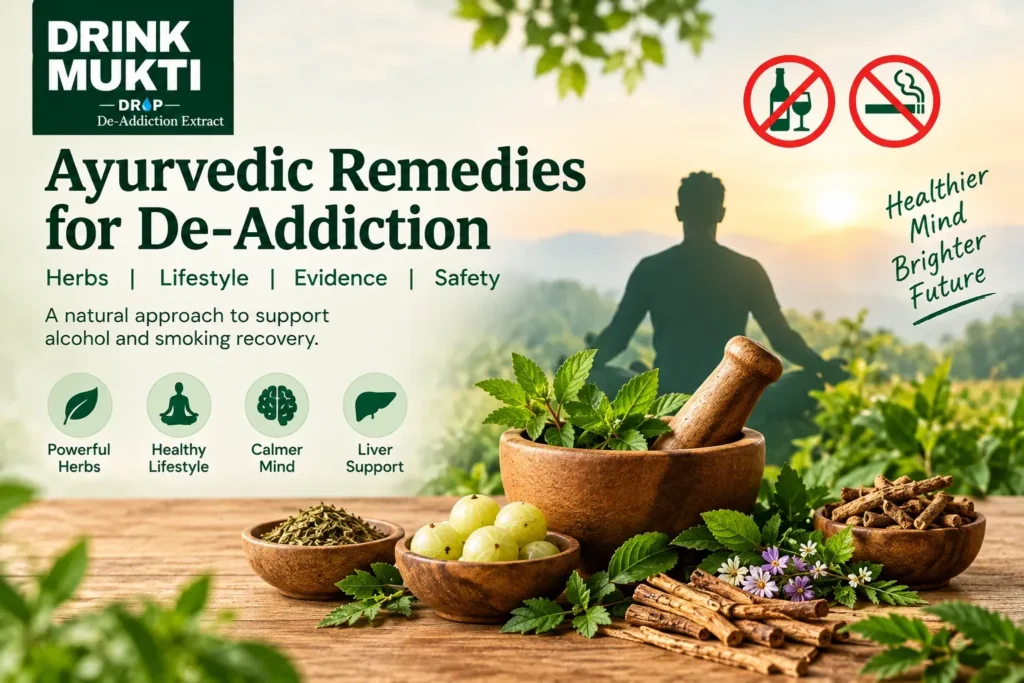
Ayurvedic remedies for de-addiction centre on specific herbs, classical formulations, and holistic lifestyle practices that work together to reduce cravings, calm the nervous system, and support the body’s natural recovery. Commonly, ayurvedic remedies for de-addiction include Ashwagandha, Brahmi, and Guduchi, used alongside dietary changes, gentle movement, and behavioural practices drawn from classical Ayurvedic tradition. Ayurveda approaches addiction not simply as a physical dependency but as a disruption of the mind and body’s natural balance, which is why its remedies span herbs, diet, movement, and behavioural practices simultaneously.
Traditional herbal knowledge has found its way into modern, accessible formats, meaning that some people now use ready-made herbal products in place of preparing individual herbs from scratch. The quality and evidence base of such products vary, so checking ingredients, sourcing, and manufacturing standards is advisable before choosing one. Drink Mukti is one such Ayurvedic herbal wellness product designed to support this kind of daily routine. This article covers which herbs are used and why, the lifestyle practices that strengthen their effect, what the clinical evidence actually shows, and the safety rules you must know before starting any herbal protocol.
The Ayurvedic herbs most often used in de-addiction support
Ayurvedic remedies for de-addiction: herbs for alcohol cravings, liver recovery, and withdrawal ease
Guduchi (Tinospora cordifolia) is one of the most widely relied-upon herbs in this context, valued for its liver-protective and immune-supportive properties. It has shown antioxidant effects in laboratory models, with small human studies reporting improvements in liver enzymes after chronic alcohol exposure. However, Tinospora cordifolia has been linked to clinically significant liver injury in case reports, so anyone with pre-existing liver disease should consult a clinician before use and not take it without supervision.
Amalaki (Emblica officinalis), Punarnava (Boerhavia diffusa), and Haritaki (Terminalia chebula) complement Guduchi as antioxidant and hepatoprotective herbs, with Haritaki particularly useful for digestive recovery, which is often disrupted after sustained alcohol use. Classical multi-herb formulations such as Arogyavardhini Vati and Patoladi Gana Kashaya bring several of these herbs together and are used in Ayurvedic clinical settings for liver and withdrawal support. Clinical evidence for these formulations is still limited and preliminary, and they are best understood as adjunctive rather than standalone treatment.
Herbs traditionally used for nicotine and smoking-related cravings
Brahmi (Bacopa monnieri) and Shankhpushpi (Convolvulus pluricaulis) are the primary choices for the mental dimension of nicotine withdrawal: the irritability, poor concentration, and restlessness that emerge when smoking stops. Jatamansi (Nardostachys jatamansi) addresses nervous agitation and disrupted sleep, two of the most common obstacles to sustaining cessation. Alongside these herbs, Ayurvedic smoking-cessation protocols use a behavioural approach called Satvavajaya, which combines replacement rituals, counselling, and mindful redirection of attention away from the craving trigger.
Adaptogenic herbs that support both habits
Ashwagandha (Withania somnifera) is commonly used in Ayurveda for stress, fatigue, anxiety, and poor sleep, conditions that cut across both alcohol and nicotine recovery. Clinical trials in non-addicted populations have reported reductions in stress and anxiety markers, though addiction-specific human evidence remains limited. It is thought to work on the HPA axis, helping recalibrate the stress response that often contributes to relapse. Mucuna pruriens is sometimes included in traditional protocols for its association with dopaminergic support, though clinical evidence for addiction use specifically remains limited to early research and should not be overstated.
How these herbs work on cravings and the nervous system
Calming the stress response that drives relapse
Chronic alcohol and nicotine use upregulate the body’s stress response over time. When the substance is removed, that heightened stress reactivity does not immediately settle, and this is one of the key triggers for relapse in the early weeks. Ashwagandha has been shown in human trials to reduce cortisol and modulate the HPA axis in healthy and stressed populations, making stress spikes less severe and more manageable. It is worth noting that robust clinical trials demonstrating reduced alcohol or nicotine craving specifically are still lacking; the mechanism is plausible, but the addiction-specific evidence should be read as preliminary.
Supporting dopamine balance and reducing compulsive urges
Brahmi and Shankhpushpi are classified as nervine herbs in Ayurvedic tradition, meaning they support the nervous system’s overall health and function. Their nervine properties are thought to support neurotransmitter balance, reducing the mental restlessness and compulsive quality of cravings that emerge when a substance is removed. Mucuna pruriens contains natural L-DOPA, a precursor to dopamine, which connects it logically to dopamine pathway support during recovery. Early research is encouraging, but it should be treated as preliminary, not as established clinical evidence.
Protecting and restoring the liver during recovery
Heavy alcohol use burdens the liver with oxidative stress and inflammation, and recovery is significantly smoother when this burden is addressed alongside craving management. Guduchi, Amalaki, and Punarnava have all been traditionally used for hepatoprotection, and some small studies have reported improvements in liver function markers with Ayurvedic formulations. These are adjunct findings, not standalone treatments, and the clinical evidence is limited and unreplicated. Notably, Guduchi itself has documented hepatotoxicity in case reports, so its use, particularly by anyone with liver disease, requires clinician oversight. Complete alcohol cessation and medical evaluation remain the foundations of liver recovery; these herbs support the process rather than replace it.
Ayurvedic lifestyle practices that strengthen recovery
Diet during withdrawal and early recovery
Ayurveda prescribes a sattvic dietary approach during recovery: warm, soft, freshly cooked foods that are easy to digest and nourishing without being stimulating. Khichdi, mung dal, cooked vegetables, rice, and oat-based preparations form the foundation. Small, frequent meals with warm liquids and moderate ghee help stabilise digestion, which is commonly disrupted during withdrawal. Cold, dry snacks, caffeine, very spicy foods, and processed items are avoided because they worsen restlessness, disturb sleep, and aggravate the digestive system at an already fragile time.
Gentle yoga and pranayama for withdrawal symptoms
The emphasis during early recovery is restoration over effort. Balasana (child’s pose), Shavasana (corpse pose), Setu Bandhasana (bridge pose), and Bhujangasana (cobra pose) are considered safe during this phase, supporting the nervous system without taxing a body already under strain. For breathwork, Nadi Shodhana (alternate nostril breathing) and Bhramari are the preferred practices: both are calming, manageable, and particularly useful before sleep. Vigorous Kapalabhati and Bhastrika should be avoided during acute withdrawal, dizziness, or hypertension, as they can aggravate existing symptoms rather than relieve them.
Satvavajaya and behavioural tools in Ayurveda
Satvavajaya chikitsa is Ayurveda’s psycho-spiritual approach to healing the mind. At its core, it means restraining the mind from harmful objects and strengthening the qualities of judgement, memory, and self-regulation that addiction tends to erode. Practically, this looks like building predictable daily routines, identifying and avoiding triggers, practising urge surfing, and replacing addictive habits with wholesome ones. This maps closely onto modern relapse-prevention frameworks, and it is one of the reasons ayurvedic remedies for de-addiction feel intuitively coherent even to people with no prior exposure to the tradition.
How to bring ayurvedic remedies for de-addiction into your daily routine
A simple morning and evening herbal ritual
The morning routine can be straightforward: warm water on waking, followed by a herb such as Ashwagandha or Guduchi taken with food, and five to ten minutes of Nadi Shodhana before the day starts properly. This sets a calm, regulated tone before the demands of the day begin. In the evening, Brahmi taken with warm water may help ease the transition to rest, though this is grounded in traditional use and small-scale research rather than large clinical trials. A short Bhramari practice before bed can settle nervous activity and support the sleep quality that recovery genuinely depends on.
Where a ready-to-use formulation fits in
Sourcing, preparing, and measuring individual herbs every day is not realistic for most people, especially when they are already managing the psychological demands of reducing a long-standing habit. This is where a well-formulated product can be genuinely useful. Drink Mukti offers a liquid herbal drop formula, a blend of traditional Ayurvedic herbs taken in water two to three times daily, designed to fit naturally into a morning and evening routine without the complexity of preparing herbs from scratch. As with any herbal product, it is best used as part of a broader recovery plan under appropriate guidance, and customer reviews are not a substitute for clinical evidence.
Consistency matters more than perfection
Ayurvedic recovery support works cumulatively. Adaptogens and nervine herbs are typically used over weeks to months in clinical practice, and meaningful effects on stress and nervous system function are unlikely from very short courses. Treat the daily herbal routine the way you would any wellness habit: built into your day, not bolted on as an afterthought. Missing a day is not a failure; returning to the routine the next morning is what matters.
Safety guidelines, drug interactions, and when to seek medical help
Herb-specific precautions and known drug interactions
Several key interactions are worth knowing before starting any herbal protocol. Ashwagandha may amplify the effect of sedatives, benzodiazepines, opioids, and anticonvulsants, and has been associated with rare cases of liver injury; anyone with liver disease or thyroid conditions should consult a clinician first. Shankhpushpi has a documented concern with phenytoin: co-administration has been reported to reduce phenytoin plasma levels and its antiepileptic effect, which is particularly relevant given that seizure risk is already elevated during alcohol withdrawal.
Guduchi should be avoided by those with autoimmune conditions or those on immunosuppressants, and given documented case reports of hepatotoxicity, it should not be used unsupervised by anyone with liver disease. Brahmi requires caution alongside antidepressants and antiepileptic drugs. Alcohol-based Ayurvedic preparations such as arishtas should be avoided entirely during withdrawal.
When Ayurvedic remedies are not enough
Severe alcohol or benzodiazepine withdrawal carries a real risk of seizures and delirium tremens, both of which are medical emergencies requiring clinical management, not herbal protocols. Opioid dependence requires evidence-based treatment: buprenorphine, methadone, or naltrexone, combined with psychosocial care. No herbal remedy prevents or manages these conditions. Using Ayurvedic remedies to delay medical treatment in these situations is dangerous.
Signs that need urgent care
Seek emergency medical care immediately for any of the following: tremors, hallucinations, confusion, seizures, severe agitation, persistent vomiting, jaundice, chest pain, or suicidal thoughts. These are not symptoms to manage with a herbal routine. They require a doctor.
Starting the journey with honesty and support
These Ayurvedic herbs and practices offer a meaningful layer of support for people working to reduce alcohol or smoking habits. Herbs like Ashwagandha, Brahmi, Guduchi, and Shankhpushpi carry a long traditional history and some clinical backing for managing cravings, withdrawal discomfort, sleep disruption, and stress, particularly when combined with diet, gentle movement, and consistent daily routines. As a broader framework, ayurvedic remedies for de-addiction are most effective when integrated thoughtfully into a wider recovery plan rather than used in isolation.
The evidence is promising but still preliminary, and anyone dealing with serious dependency should consult a qualified Ayurvedic practitioner or medical professional before beginning. Safety considerations, particularly around herb-drug interactions and the hepatotoxicity profile of certain herbs, make professional guidance essential rather than optional. For those ready to take the first step, a well-formulated daily herbal product like Drink Mukti can make the routine more manageable without the complexity of preparing individual herbs from scratch.
The path toward less dependence is rarely a single dramatic moment. More often, it is a sequence of small, consistent choices. The right herbal support, taken daily and with appropriate care, can be one of those choices.